

MNM Scales 100,000 lb Tank Scale Kit for Silos, Hoppers & Bulk Material Weighing
- pete8781
- Jul 29
- 2 min read
For help planning a silo or hopper weighing system, call MNM Scales at (832) 290-3120 or email mnmscales@yahoo.com.
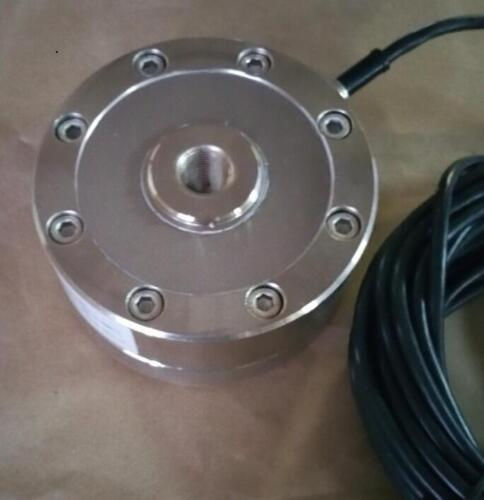
The MNM Scales 100,000 lb tank scale kit for silos, hoppers and bulk material weighing can turn a supported vessel into its own weighing platform by measuring the reaction at four 25,000 lb compression load cells. For facilities handling feed, grain, resin, powder, aggregate ingredients or other bulk materials, weight-based inventory can be more direct than estimating mass from level alone because it measures the actual load carried by the vessel supports.
Why Weigh a Silo or Hopper Instead of Only Measuring Level?
Level sensors measure height or distance and then rely on vessel geometry and bulk density to estimate mass. Bulk density can change with aeration, compaction, moisture and material lot. Load cells measure support force, so the system can report weight even when the material surface is uneven. Some processes use both technologies: level for high/low control and load cells for inventory or batch mass.
Bulk-Filling Forces Can Exceed Static Product Weight Locally
Material entering a hopper can create impact, vibration and uneven distribution. Aerators, vibrators and screw feeders can add dynamic forces. A heavy product pile may initially bias one side of the vessel. The tank structure and 25,000 lb support cells must be selected for those real conditions, not only the final static total. Anti-lift and lateral restraints may also be required while remaining free enough vertically that normal weight reaches the sensors.
Applications: Inventory, Batching and Loss-in-Weight Concepts
A vessel scale can show gross inventory, calculate material added during filling, or measure material removed during discharge. In a batching process, the controller can tare the empty or current vessel and stop a feeder after a target amount is added. Loss-in-weight systems use the decrease in vessel weight to infer feed rate; that type of closed-loop control needs compatible controls and software beyond the basic indicator, but the load-cell installation is the underlying measurement element.
Common Mechanical Error Sources
Rigid fill pipes, discharge chutes, dust collectors, screw conveyors and catwalk connections can carry force around the cells. Product buildup can bridge a gap between the weighed vessel and a fixed frame. A flexible boot can become stiff when packed with powder. These effects often produce nonlinear or fill-level-dependent error that cannot be corrected by a single span adjustment.
Calibrating a Bulk-Material Vessel
Balance the four support responses, establish the defined empty or heel condition, then use an appropriate known-load or substitution method for span. Verify at multiple loads when possible. For a process where the scale controls material additions, compare the scale result with an independent receiving or batch reference periodically so process changes are detected before they become large inventory discrepancies.
Comments