

MNM Scales Livestock Scale Kit Guide: 4 Load Cells, LP7515-C, Junction Box & Full Setup
Need more details or help planning a livestock or platform scale build? Call MNM Scales at (832) 290-3120 or email mnmscales@yahoo.com.
The MNM Scales livestock scale kit is a four-load-cell weighing package designed to turn a properly built cattle chute, animal platform, floor scale or custom deck into an electronic weighing system. Instead of buying a complete welded scale, the kit supplies the sensing, summing and display components: four 5,000 lb shear-beam load cells, mounting hardware, leveling feet, a four-channel junction box, interface cable and an LP7515-C LCD indicator with battery and AC power.

What Comes in the MNM Livestock Scale Kit?
MNM lists four nickel-plated alloy-steel shear-beam load cells, each rated 5,000 lb with a 3.0 mV/V rated output and 15 ft cable. The package also includes four leveling feet with molded rubber inserts, load-cell mounting hardware, a four-channel signal-trim junction box/summing board, a 15 ft four-wire interface cable with quick disconnect, and the LP7515-C LCD indicator with bracket, battery and 100–220 V AC adapter. The listed leveling feet are approximately 2.375 inches in diameter and 3 inches long, with a 1.625-inch-long 1/2-20 threaded section.
How a Four-Load-Cell Livestock Scale Works
One load cell supports each corner or reaction point of the weighing deck. As an animal steps onto the platform, the load is distributed among the four sensors. Their millivolt signals travel to the junction box, where individual channels can be trimmed so the system responds consistently to weight placed in different areas of the deck. The summed signal then goes to the indicator, which converts the load-cell output into a displayed weight after calibration.
The four-cell architecture is useful for livestock because animals rarely stand perfectly centered. A well-built platform, properly mounted cells and a correctly adjusted junction box help reduce corner-to-corner variation. Mechanical design still matters: the deck should transfer vertical load cleanly into the cells without binding against ramps, rails, gates or surrounding concrete.
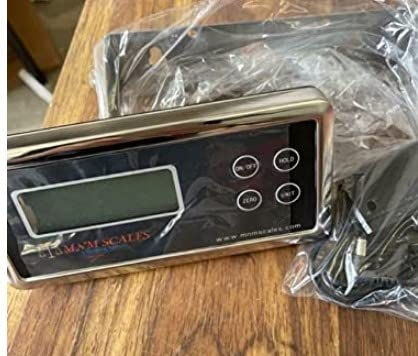
LP7515-C Indicator Features for Animal Weighing
The LP7515 family is a compact six-digit LCD indicator built for strain-gauge load cells. Published LP7515 documentation supports zero, tare, hold functions, unit selection and connection to as many as four 350-ohm load cells. RS232 is available for sending weight data to compatible external equipment. Animal/hold functionality is particularly useful when a cow, hog, goat or sheep is moving enough that a continuously changing live number would be difficult to read.
Installation Priorities: Structure, Alignment and Free Movement
Start with a rigid, level structure. Each cell should sit on a solid mounting surface and carry load in the direction intended by its mounting assembly. The platform must be free to move microscopically under load; a chute rail touching a wall, a ramp binding against the deck or packed debris underneath can create a parallel load path that bypasses the sensors. Route cables away from hooves, sharp edges, pinch points, rodents and washdown traffic, and place the junction box where it can be serviced without becoming an impact point.
Corner Adjustment and Calibration
After the mechanical build is complete, corner-test the platform by placing the same known test load near each supported area. The junction box trim controls are used to bring the corners into agreement. Only after corner response is acceptable should the complete system be calibrated at the indicator using known weight. For best results, use meaningful test weight distributed in a controlled way and repeat the test after the platform has been cycled several times. Recheck after major mechanical changes, relocating the scale or replacing a load cell.
Main Applications
Cattle and squeeze-chute weighing — for ranches, veterinary checks, sale weights and herd management. Hogs, sheep, goats and pigs — for smaller livestock and group-specific management workflows. DIY floor and platform scales — for users fabricating their own deck or converting an existing structure into a scale.
Common Troubleshooting Checks
A reading that changes by animal position usually points first to mechanical binding, uneven support, corner-adjustment errors or one sensor carrying a disproportionate share of load. A drifting zero can come from moisture, damaged cable, unstable mounting, temperature changes or a platform that does not return freely. A completely dead corner suggests inspecting that load cell, its cable termination and its junction-box channel. Before changing calibration settings, confirm that the structure itself is not touching something outside the weighing system.
Frequently Asked Questions
Does the kit include the weighing platform or squeeze chute?
The MNM listing describes the electronic weighing kit—load cells, mounting components, feet, junction box, cabling and indicator. The deck, chute or structural platform is the part the installer supplies or converts.
Why are there four 5,000 lb load cells?
Four sensors allow a rectangular platform to be supported at four points and let the junction box combine their output. The mechanical capacity of a finished scale depends on the complete structural design, load distribution and how the sensors are mounted—not merely the arithmetic sum of the cell labels.
Can the system weigh moving animals?
The LP7515 family includes hold/animal-weighing functionality intended to make unstable loads easier to read. Good animal handling and a rigid, non-binding platform still improve repeatability.

Comments