

MNM Scales Livestock Scale Kit for Cattle & Squeeze Chute Weighing
Need more details or help fitting the kit to a cattle chute? Call MNM Scales at (832) 290-3120 or email mnmscales@yahoo.com.
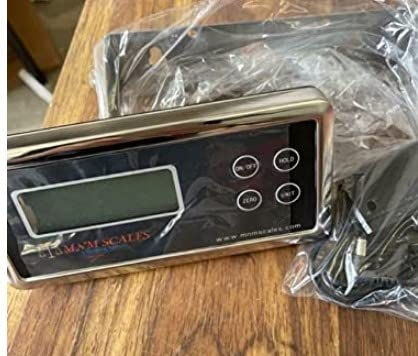
The MNM Scales livestock scale kit for cattle and squeeze chute weighing gives ranches and livestock operations the core electronics needed to add weight measurement beneath a properly designed chute or animal platform. Four 5,000 lb shear-beam load cells support the structure, a junction box combines and trims the sensor signals, and the LP7515-C indicator provides the operator’s readout and hold functionality.

Why Weigh Cattle at the Chute?
A squeeze chute is already a controlled point where cattle are handled individually, so integrating weighing there can reduce the need to move animals onto a separate standalone platform. Regular weights help ranchers follow average daily gain, evaluate feed programs, monitor condition, calculate medication or treatment doses that depend on body weight, sort animals into management groups, document pre-sale weights and identify animals that are not gaining as expected.
Building the Weighing Base Under a Chute
The chute or deck needs four engineered reaction points that transfer vertical force into the load cells without bypassing them. A common approach is a rigid lower frame anchored to the floor and a rigid upper frame carrying the chute, with one load-cell mounting assembly near each corner. Gates, head catches, alley panels and ramps must not create rigid contact with surrounding structures while a weight is being taken. Even a small mechanical bridge can shunt part of the load around the sensors and make the displayed weight depend on where the animal stands.
Handling Motion: Why Hold Function Matters
Cattle rarely remain perfectly still. The LP7515 family provides hold/animal-weighing functions intended for unstable loads. In practice, good data starts with calm handling: let the animal enter fully, close the gates without hitting the weighing frame, keep all hooves on the supported deck and allow the display to settle or lock before recording the result. A repeatable handling routine improves data quality as much as the electronics do.
Corner Testing a Long Cattle Chute
Long platforms are sensitive to uneven support. Test the front-left, front-right, rear-left and rear-right regions with the same known load. If the displayed value differs by position, inspect the structure for binding first, then use the junction-box trim process to balance the four cell signals. Repeat the corner check after adjustment and perform final calibration only after the platform responds consistently.
Ranch Data You Can Build Around Reliable Weights
Consistent weight records are useful for growth-rate comparisons, sale-group sorting, breeding and replacement decisions, feed-efficiency studies and health monitoring. The most valuable trend is often not a single weight but the change over time. Use the same weighing routine, similar timing relative to feeding when possible, and identify each animal consistently so changes reflect the animal rather than the process.
Frequently Asked Questions
Can I put the load cells under an existing squeeze chute?
Yes, if the chute can be supported on a rigid load-cell frame with four clean reaction points and isolated from surrounding structures. The conversion is a mechanical fabrication project as well as an electronic one.
What happens if a ramp touches the scale deck?
A rigid contact can bypass part of the animal’s weight around the sensors. Provide clearance or a transition arrangement that does not support the weighing deck during measurement.
Can the indicator send data to a computer?
The kit listing includes RS232 on the indicator, providing a serial interface for compatible data equipment or custom recordkeeping workflows.


Comments